
Real projects. Real impact.
Build work that
reaches beyond Earth
A student-led satellite project built by engineers across disciplines. Teams learn by doing: designing systems, testing hardware, and turning a shared idea into a mission that serves people on Earth.
Free · Instant Access · Lessons from NASA & ULA Veterans
ENGINEERING ARCHITECTURE // FLIGHT HARDWARE
Bridging Vision And Reality
Theoretical orbital mechanics only hold value when they survive the severe vibroacoustic loads of maximum dynamic pressure. The ACT initiative eliminates the standard abstraction layer between classroom simulation and mission-critical hardware execution.
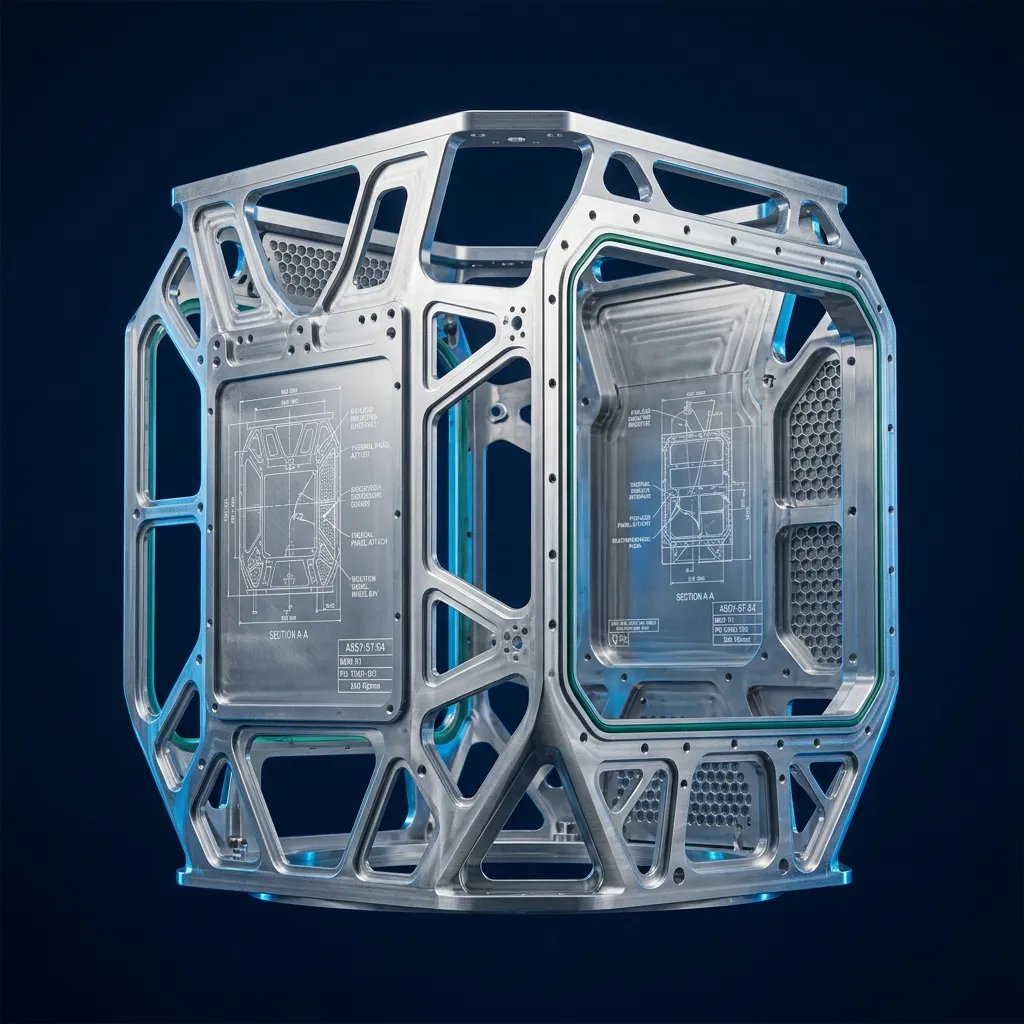
Engineers within the project interface directly with CNC-milled 6061-T6 aluminum primary structures, radiation-hardened avionics suites, and flight-qualified power distribution modules built to withstand high vacuum thermal extremes from -65°C to +125°C.
By enforcing NASA and DoD flight-readiness review standards at every iteration gate, ACT provides working engineers and technical candidates with genuine orbital pedigree rather than speculative portfolio projects.
SUBSYSTEM SPECIALIZATIONS
Six Core Disciplines
Mission-grade space systems require synchronized execution across specialized engineering tracks. Explore the structural architecture and technical focus areas defining the satellite development cycle.
Aerospace & ADCS
Orbital mechanics modeling, attitude determination & control systems, reaction wheel dynamics, and high-precision trajectory targeting algorithms.
Mechanical & Thermal
Finite element vibration analysis, extreme thermal dissipation modeling (-150°C to +120°C), deployable solar hinge mechanisms, and chassis integration.
Electrical & Power
Electrical power subsystem (EPS) architecture, multi-junction solar harvesting, LiFePO4 battery regulation, and radiation-tolerant harness layout.
Flight Software & C&DH
Deterministic real-time operating systems (RTOS), autonomous fault detection, isolation, and recovery (FDIR), and command/data handling pipelines.
Systems & Integration
Interface Control Document (ICD) management, mission risk mitigation, NASA technical review compliance (PDR/CDR), and full flat-sat integration.
Payload & Space Science
Scientific sensor telemetry acquisition, optical payload calibration, atmospheric radiation measurement, and orbital ground station data reduction.
LIFECYCLE ARCHITECTURE
From Concept To Orbit
The end-to-end flight readiness sequence connecting multidisciplinary engineering teams from preliminary requirements to mission operations.
Concept & Mission Feasibility
Translating science objectives into system-level mass, link budget, and delta-V budgets. Cross-discipline trade studies define the fundamental satellite baseline.
Preliminary Design Review (PDR)
Detailed thermal mesh modeling, PCB stackup routing, and CAD envelope locking. Avionics simulation harness verifies flight computer command architectures.
Assembly, Integration & Test (AIT)
Flight model component mating in ISO 7 cleanroom environment. Subjected to sine vibration profiles, thermal vacuum chambers (TVAC), and EMC qualification.
Launch & Dispenser Deployment
Integration inside the rideshare dispenser, countdown telemetry verification, launch ascent, and spring-loaded orbital injection into targeted sun-synchronous orbit.
Commissioning & Flight Operations
First beacon acquisition via ground stations, detumbling through magnetorquers, subsystem health telemetry lock, and commencement of core payload mission tasks.
6
Disciplines
120+
Contributors
4
Subprojects
1
Mission
FREE AEROSPACE CAREER BRIEFING
Ready to get on a real mission?
A student-led satellite project where engineers design, test, and build together. Start with the free briefing.
100% Free · Immediate Access · Approx. 10 Minutes Runtime
ACT Aerospace • Mission-Driven Engineering Career Briefings • Ground-to-Orbit Operational Systems • [email protected] • 321-220-8002
Mission | Flight Story | Disciplines | Orbital Process | Get | Privacy | Terms

ACT. All rights reserved.